
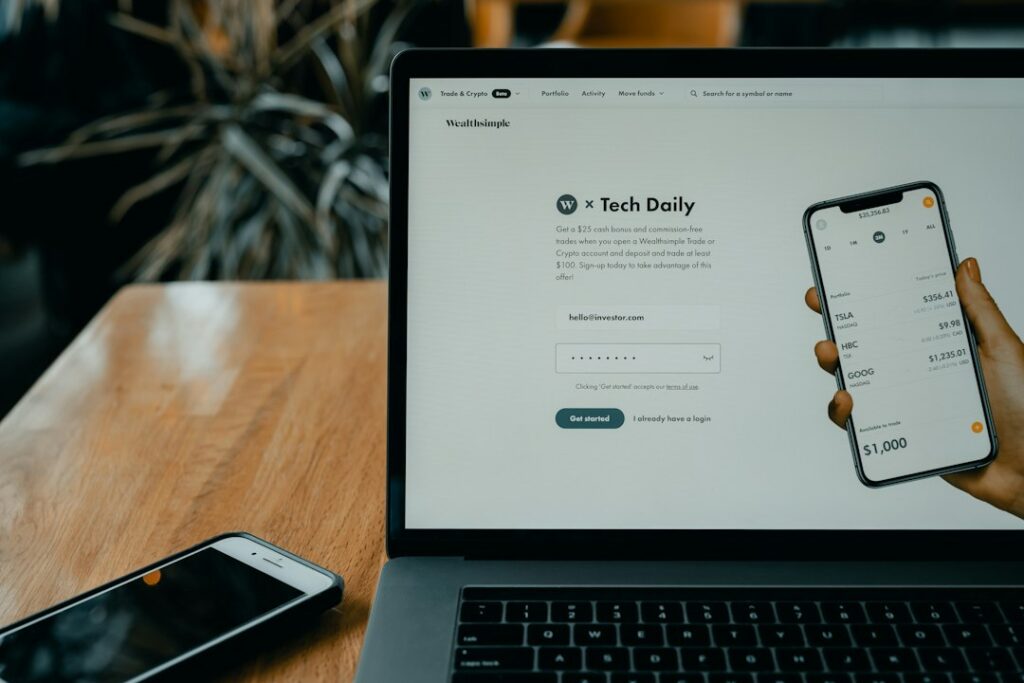
Discover resilient finance strategies for freelancers navigating global markets seamlessly.
Here’s the brutal truth: juggling API limitations and borderless finance issues can feel like programming underwater. As a tech entrepreneur who’s seen it all, the reality is that if you want to succeed as a freelancer in the global market, your financial management needs to be as resilient as your codebase. Let’s break down the systemic architecture you need to thrive while reducing financial drag.
The Core Technical Problem & Why This Matters
Freelancers navigating the global market face an uphill battle against foreign exchange (FX) spreads, fluctuating currencies, and cross-border transaction fees. Each small inefficiency chips away at hard-earned profit margins. These technical bottlenecks not only complicate financial transactions but also strain your resources and sanity. The widespread reliance on multifunctional APIs and integrations poses additional challenges. These tools are not always as streamlined as advertised, leading to gaps that can spell disaster for your financial planning.
The stakes are high: global freelancers need a robust financial framework to handle payments from multiple countries with variable regulations. Without this, your business is just one API update away from chaos. Managing these elements requires a strategic approach to ensure a balanced blend of liquidity, scalability, and compliance. But achieving this is no easy feat when you’re flying solo.
The Systems Engineering Approach

To design a resilient freelance finance framework, think like a systems engineer. What you need is an integrated ecosystem that minimizes points of failure. Start by leveraging APIs capable of handling multiple currencies with minimal conversion loss. CurrencyLayer and Fixer.io are good examples of APIs that offer real-time exchange rate information, reducing your dependency on high-fee financial institutions. Your mission is to create a synthetic currency balance sheet that allows you to see and manage multiple currencies simultaneously.
Webhook architectures come into play here, acting as a bridge for real-time updates across your entire financial stack. They enable seamless integration across different platforms and services, eliminating redundancy and ensuring you never miss a crucial financial update. Additionally, automating invoice generation and dynamic currency conversion can keep you ahead in this volatile market. Leveraging platforms like Stripe or PayPal with tailored APIs enhances your pipeline, providing resilient pathways for income and expenditure management.
Real-World Architecture & ROI
To comprehend the return on investment (ROI) of a well-designed finance network, imagine the costs tied to a poorly implemented system. High FX spread, transaction charges, and delays can chip away at not just financial resources but also your brand’s reputation. Optimizing your monetary architecture to increase real-world profitability involves upfront analysis and continuous monitoring.
Consider this real-world example: A freelance project manager coordinating projects worldwide utilized a mixture of Payoneer and TransferWise to handle client payments. By amalgamating these services with their native APIs, she managed to shave off nearly 5% of unnecessary transaction fees annually. That’s a direct financial recovery put back into her business.

The key lies in balancing cost with efficiency; the right architecture does not just save money but also provides a higher return through time and resource savings. Building such a system can be complex, yet the compounded ROI over time can justify the initial setup efforts many times over.
Common API & Integration Pitfalls
When dealing with APIs and integrations, pitfalls are inevitable. Many freelancers are enticed by APIs promising seamless operations, only to find limitations that create bottlenecks instead of resolving them. Issues like insufficient documentation, update lags, and incompatibility with existing systems can result in costly errors and wasted time.
An example is the recurrent synchronization failures in payment gateways when schedules are misaligned due to differing cut-off times across currencies. The aftermath of these desynchronized systems can grind operations to a halt and incur additional transaction costs. To mitigate this, ensure that API policies and limitations are well understood. Implement sandbox environments for testing integrations and ensuring that core functions behave as expected before going live.
Reliability is crucial, so focus on choosing APIs with a track record of good uptime and customer support. Failover systems and backup strategies should be part of your planning to ensure continuity even when primary systems fail.

The Ultimate Scalability Factor
Scalability is the silent driving force behind successful financial architecture. As your freelance business grows, your financial systems must scale to handle the increased load without introducing bottlenecks. This means your system should be capable of processing an increasing volume of transactions, currencies, and clients without degrading performance.
Invest in API proxies and rate-limiters to manage the strain and ensure your services can scale. Balancing API usage between critical and non-critical functions can prevent rate-limit triggers that may otherwise stall essential operations. Additionally, having a distributed system approach can help manage diverse geographical transactions, providing a quicker response time while reducing central server loads.
It’s critical to continuously reevaluate and upgrade systems in line with evolving financial technologies and market demands. The real test of scalability is not just how much you can handle today but how well you adapt to the financial landscapes of tomorrow.

Want the JSON Blueprint for this architecture?
I don’t charge for the blueprint. If you want to replicate this automated pipeline in your own workspace, send me the word “AUTOMATION” directly on Telegram.
Need this exact pipeline integrated into your business? Send a message to discuss custom deployment and API routing.
📌 Found this helpful? Pin it for later!

The exact gear I use to run my businesses from the Philippines.


“Automation trims wasted seconds; manual labor thrives on endless transactions. Pick your side.”
Software Scales Your Business. What Scales You?
The ultimate productivity bottleneck isn’t your SaaS stack—it’s your neurochemistry. Get a clinical-grade, AI-driven biochemical analysis architected exclusively for high-performing founders.
Tech Entrepreneur & AI Automation Expert. Writing from his home office in Davao City, Philippines.

![Best Bank Accounts for Digital Nomads in Southeast Asia [Honest Review]](https://techhustledaily.com/wp-content/uploads/2026/04/image-42-1024x576.jpg)