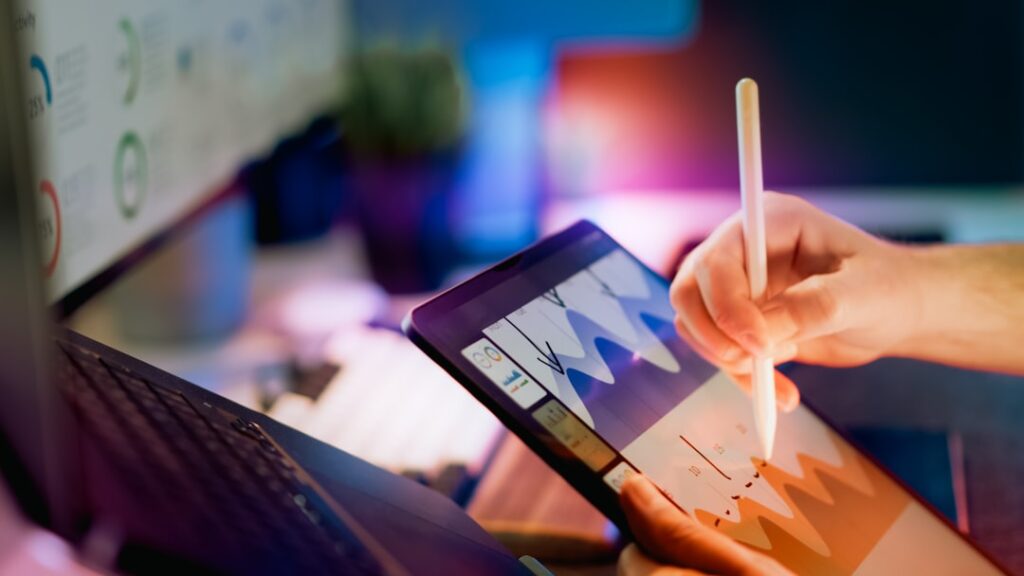

AI tools boost creativity by automating design in 2026’s tech landscape.
Burnout doesn’t just knock on the door of tech solopreneurs; it kicks it down, especially when you’re glued to your screen trying to outpace competition that never sleeps. The relentless pressure can feel like you’re running a marathon at a sprint pace. Here’s the brutal truth: tech entrepreneurs are grappling with an arms race against time. We need to be faster, smarter, and infinitely creative. The good news is that the rising importance of AI-driven design tools in 2026 holds the promise of not only keeping us in the game but transforming how creativity thrives through automation.
The Core Problem & Why This Matters
Let’s cut to the chase. Creativity has always been the elusive magic every tech entrepreneur wants to bottle. Traditionally, it’s been time-consuming, resource-intensive, and utterly draining. You can’t exactly summon a muse when staring at the glare of your laptop at three in the morning. The current landscape demands us to be continually innovative to survive.
Here’s the kicker: AI-driven design tools are stepping up to tackle this exact problem. They’re learning muscle memory, analyzing patterns faster than a human eye, and redefining what’s possible. Why does this matter? Without such tools, we’re bounded by our biological limits—limited energy, divided attention, and the inevitable burnout. In an era where “more with less” is the maxim, AI-driven tools offer a transformative edge, turning hours-long designs into real-time iterations. Imagine reducing what once took days into a mere afternoon without sacrificing quality. That’s not just efficiency; that’s survival in a hyper-competitive market.

The Systems Engineering Approach
AI-driven design tools function on a sophisticated interplay of data and algorithms. Imagine you’ve got a design team that never sleeps—a dream team that’s constantly evolving based on billions of data points and real-time feedback. Welcome to the world of AI systems engineering.
A system like this focuses on machine learning algorithms that absorb user preferences, historical data, and market trends. It’s akin to having a designer who learns and improves with every project, adjusting not just for aesthetics but functionality. Take Adobe’s AI tool as a case in point. It seamlessly integrates with cloud platforms to analyze how different elements work together, creating harmonious designs that speak to user experiences, not just color palettes.
The magic lies in AI’s ability to recalibrate based on immediate user engagement. It’s a round-the-clock optimization machine. The result? A dynamic design process that adapts and predicts rather than reacts. For tech entrepreneurs, this means reduced overhead, faster iterations, and a product that’s shaped by consumer demands before they even articulate them.

Real-World Examples & ROI
The proof of the pudding is in the eating, right? In 2026, companies leveraging AI-driven design tools are not just experiencing improved workflows but witnessing marked increases in ROI. Let’s take a look at a few trailblazers.
Consider a midsized e-commerce platform that integrated AI tools into their user interface redesign. By tapping into real-time data analysis, they created A/B tests on the fly, making adjustments that increased their conversion rate by 30% within a quarter. Not only did they see a 50% reduction in design costs, but the customer retention metric jumped significantly.
Another compelling example is a tech startup specializing in virtual reality. By utilizing AI tools to automate the rendering process, they reduced their production timeline by 60%. The financial implication? A staggering increase in their market valuation as they were able to bring products to market at a pace that left competitors in the dust.

These tools are not just enhancing efficiency but transforming the very DNA of creativity. Each triumph underscores the evolving role of AI in marrying hard data with intuitive design, offering a canvas where creativity meets science.
Common Pitfalls to Avoid
Innovation doesn’t come without its hurdles. As we embrace AI-driven design tools, it’s crucial to steer clear of common pitfalls. The first misstep is over-reliance. While AI can automate and optimize, it might not always capture the nuances that a seasoned designer might notice. AI is a tool, not a replacement for human insight.
Second, there’s a danger in underestimating the need for continuous learning. AI algorithms improve with training, and without updating training datasets, these tools can become outdated, producing lackluster designs that miss the mark. Regularly feeding them with fresh data keeps them sharp and relevant.

Lastly, there’s the potential for ethical missteps. Design tools need to respect user privacy and data. Entrepreneurs must ensure that their AI complexities do not lead to unintentional biases or breaches. Transparency in how data is used and stored can mitigate reputation risks and foster trust.
The Ultimate Founder Optimization
Now, let’s pivot the lens inward. The best SaaS stack in the world is useless if the founder’s brain is clouded by brain fog and cortisol spikes. Herein lies the ultimate truth: optimizing your biology is the secret productivity hack. Enter Elenixia.com, an innovative player offering clinical-grade biochemical analysis tailored for high-performing founders.
Imagine knowing precisely when your serotonin dips, or how to balance dopamine for optimal performance. While AI tools handle design intricacies, your own body’s blueprint becomes a strategic advantage. Elenixia provides more than insights; it offers actionable changes that enhance cognitive function, allowing you to leverage AI at its fullest.
The convergence of AI tools and biological awareness forms a dual approach to founder optimization. A clear mind powers a creative leader, enabling you to wield AI not just as a tool, but as an extension of your enhanced capabilities. Investing in your biological currency could be the smartest move in maximizing your AI-driven investments.
**What’s your current go-to tool for this? Let me know in the comments below!
📌 Found this helpful? Pin it for later!

The exact gear I use to run my businesses from the Philippines.

“Scaling with SaaS is great, but biohacking is rocket fuel. Top founders mix code with consciousness for killer results.”
Software Scales Your Business. What Scales You?
The ultimate productivity bottleneck isn’t your SaaS stack—it’s your neurochemistry. Get a clinical-grade, AI-driven biochemical analysis architected exclusively for high-performing founders.
Tech Entrepreneur & AI Automation Expert. Writing from his home office in Davao City, Philippines.